

 Image 1 of 1
CYLINDER COMPRESSION TEST
Cylinder pr
Cylinder Pressure Test $100.00-$250.00
What it is
A cylinder pressure test measures the compression and pressure characteristics inside each engine cylinder. It helps diagnose issues with piston rings, valves, head gasket, and overall sealing integrity.
Why it matters
Proper cylinder pressure is essential for efficient combustion, power output, fuel economy, and emissions. Low or uneven pressure between cylinders indicates mechanical wear or leakage that will reduce performance and can cause further damage if left unaddressed.
Types of tests
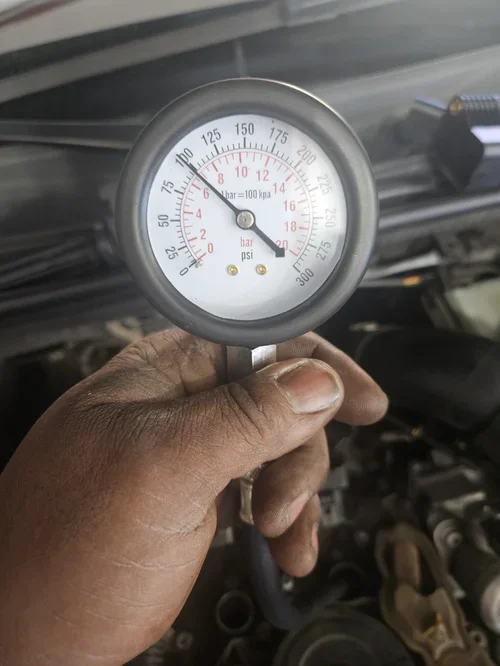
Compression Test: Measures peak static compression in each cylinder with the engine cranking. Quick and useful for initial diagnosis.
Leak-Down Test (Leakage or Cylinder Leak-Down): Pressurizes each cylinder at top dead center (TDC) and measures how much air escapes, pinpointing where leakage occurs (intake, exhaust, past rings, or through the head gasket).
Crankcase Pressure & Dynamic Cylinder Pressure: Performed with specialized sensors; used in advanced diagnostics and performance tuning.
When to perform
Hard starting, misfiring, poor fuel economy, low power, blue smoke from exhaust, coolant loss without visible leaks, or suspected head gasket failure.
Cylinder Pressure Test
What it is
A cylinder pressure test measures the compression and pressure characteristics inside each engine cylinder. It helps diagnose issues with piston rings, valves, head gasket, and overall sealing integrity.
Why it matters
Proper cylinder pressure is essential for efficient combustion, power output, fuel economy, and emissions. Low or uneven pressure between cylinders indicates mechanical wear or leakage that will reduce performance and can cause further damage if left unaddressed.
Types of tests
Compression Test: Measures peak static compression in each cylinder with the engine cranking. Quick and useful for initial diagnosis.
Leak-Down Test (Leakage or Cylinder Leak-Down): Pressurizes each cylinder at top dead center (TDC) and measures how much air escapes, pinpointing where leakage occurs (intake, exhaust, past rings, or through the head gasket).
Crankcase Pressure & Dynamic Cylinder Pressure: Performed with specialized sensors; used in advanced diagnostics and performance tuning.
When to perform
Hard starting, misfiring, poor fuel economy, low power, blue smoke from exhaust, coolant loss without visible leaks, or suspected head gasket failure.
As part of a comprehensive engine rebuild inspection.
How it's done (overview)
Prepare:
Warm the engine to normal operating temperature for consistent readings.
Disable fuel and ignition systems (remove fuel injectors, disable ignition coil/fuel pump) per manufacturer recommendations.
Remove spark plugs.
Compression Test:
Screw a calibrated compression gauge into the spark plug hole.
Crank the engine several revolutions (throttle fully open on most engines).
Record peak PSI for each cylinder.
Repeat with a few more attempts and average readings if needed.
Leak-Down Test:
Bring piston to TDC on the compression stroke for the cylinder being tested.
Connect a regulated compressed air source and a leak-down gauge to the spark plug hole.
Measure percentage leakage and listen/observe for air escaping from the intake, exhaust, oil filler cap, or coolant overflow to locate the leak path.
What the numbers mean (general guidelines)
Compression Test:
Healthy gasoline engines: typically 120–200 psi per cylinder, with manufacturer-specific specs; values outside this range or cylinders differing by more than about 10–15% indicate problems.
Leak-Down Test:
0–5%: Excellent sealing.
5–20%: Acceptable, may indicate minor wear
essure test
Cylinder pr
Cylinder Pressure Test $100.00-$250.00
What it is
A cylinder pressure test measures the compression and pressure characteristics inside each engine cylinder. It helps diagnose issues with piston rings, valves, head gasket, and overall sealing integrity.
Why it matters
Proper cylinder pressure is essential for efficient combustion, power output, fuel economy, and emissions. Low or uneven pressure between cylinders indicates mechanical wear or leakage that will reduce performance and can cause further damage if left unaddressed.
Types of tests
Compression Test: Measures peak static compression in each cylinder with the engine cranking. Quick and useful for initial diagnosis.
Leak-Down Test (Leakage or Cylinder Leak-Down): Pressurizes each cylinder at top dead center (TDC) and measures how much air escapes, pinpointing where leakage occurs (intake, exhaust, past rings, or through the head gasket).
Crankcase Pressure & Dynamic Cylinder Pressure: Performed with specialized sensors; used in advanced diagnostics and performance tuning.
When to perform
Hard starting, misfiring, poor fuel economy, low power, blue smoke from exhaust, coolant loss without visible leaks, or suspected head gasket failure.
Cylinder Pressure Test
What it is
A cylinder pressure test measures the compression and pressure characteristics inside each engine cylinder. It helps diagnose issues with piston rings, valves, head gasket, and overall sealing integrity.
Why it matters
Proper cylinder pressure is essential for efficient combustion, power output, fuel economy, and emissions. Low or uneven pressure between cylinders indicates mechanical wear or leakage that will reduce performance and can cause further damage if left unaddressed.
Types of tests
Compression Test: Measures peak static compression in each cylinder with the engine cranking. Quick and useful for initial diagnosis.
Leak-Down Test (Leakage or Cylinder Leak-Down): Pressurizes each cylinder at top dead center (TDC) and measures how much air escapes, pinpointing where leakage occurs (intake, exhaust, past rings, or through the head gasket).
Crankcase Pressure & Dynamic Cylinder Pressure: Performed with specialized sensors; used in advanced diagnostics and performance tuning.
When to perform
Hard starting, misfiring, poor fuel economy, low power, blue smoke from exhaust, coolant loss without visible leaks, or suspected head gasket failure.
As part of a comprehensive engine rebuild inspection.
How it's done (overview)
Prepare:
Warm the engine to normal operating temperature for consistent readings.
Disable fuel and ignition systems (remove fuel injectors, disable ignition coil/fuel pump) per manufacturer recommendations.
Remove spark plugs.
Compression Test:
Screw a calibrated compression gauge into the spark plug hole.
Crank the engine several revolutions (throttle fully open on most engines).
Record peak PSI for each cylinder.
Repeat with a few more attempts and average readings if needed.
Leak-Down Test:
Bring piston to TDC on the compression stroke for the cylinder being tested.
Connect a regulated compressed air source and a leak-down gauge to the spark plug hole.
Measure percentage leakage and listen/observe for air escaping from the intake, exhaust, oil filler cap, or coolant overflow to locate the leak path.
What the numbers mean (general guidelines)
Compression Test:
Healthy gasoline engines: typically 120–200 psi per cylinder, with manufacturer-specific specs; values outside this range or cylinders differing by more than about 10–15% indicate problems.
Leak-Down Test:
0–5%: Excellent sealing.
5–20%: Acceptable, may indicate minor wear
essure test